
What is Hometown Heroes and why the July 13 date matters
Hometown Heroes is a state-funded down payment assistance program run by the Florida Housing Finance Corporation. It launched in 2022 to help Florida's frontline workers (teachers, nurses, law enforcement, first responders, military members, and dozens of other approved professions) stay in the state as home prices climbed out of reach. The program is aimed squarely at the people who keep Florida communities running.
The program does one thing very well: it puts up to $35,000 of state money on the closing table so a Florida buyer can get into a home with little or nothing of their own cash out of pocket. That money comes as a 0% interest, deferred second mortgage, no monthly payment, no interest accrual, and no repayment required until the home is sold, refinanced, or the first mortgage is paid off.
Every year the program pauses to reload allocation from the Legislature and to update income limits. Based on the current program highlights published by eHousingPlus, Florida Housing's program administrator, the 2026 relaunch is anticipated for July 13, 2026. Reservations open through participating lenders that morning and are first-come, first-served until the annual allocation is committed. In previous years, funds have been reserved faster than most buyers expected.
Here's the important part if you're shopping right now: we can get you fully pre-approved before July 13. The reservation itself happens on launch day, but everything else, credit review, income documentation, homebuyer education, appraisal timing on a home already under contract, can be lined up in advance. I've been getting buyers ready across Charlotte, Sarasota, Lee, and Palm Beach counties since June so we can hit reserve on day one.
"The Hometown Heroes allocation moves fast. If your loan isn't already lined up on July 13, you're already behind."
How the $35,000 in assistance actually works
The assistance is 5% of the first mortgage loan amount, capped at $35,000. On a $500,000 loan the cap kicks in first, you'd receive $25,000 (5% of $500,000), not the full $35,000. To hit the $35,000 ceiling you'd need a first mortgage of $700,000 or more.
The money is applied to the down payment only. It cannot be used for closing costs or prepaid items (property tax escrow, insurance escrow, prepaid interest), and it cannot be taken as cash back at closing. Closing costs and prepaids are typically handled with seller credits or a lender credit, which I structure alongside the DPA on your loan.
| Purchase price | Loan type & base LTV | First mortgage | Hometown Heroes DPA | Buyer cash to close (est.) |
|---|---|---|---|---|
| $300,000 | FHA · 96.5% | $289,500 | $14,475 (5%) | Often $0–$1,500 with seller credit |
| $400,000 | Conventional · 97% | $388,000 | $19,400 (5%) | Often $0–$2,500 with seller credit |
| $500,000 | VA · 100% | $500,000 | $25,000 (5%) | Often $0 when combined with seller credit for closing costs |
Repayment terms are the single most attractive part of this program:
- 0% interest: no interest ever accrues on the balance
- Non-amortizing: no monthly payment on the DPA
- Deferred silent second: the loan sits in second-lien position and does not affect your monthly payment
- Repayable events only: sale, refinance, payoff of the first mortgage, or the home ceasing to be your primary residence
- No prepayment penalty: pay it off whenever you choose without penalty
Because the DPA is down-payment only, closing costs and prepaids need to be covered separately. The program is structured to let you combine DPA with any allowable seller credit on your first mortgage. On FHA that means a seller can contribute up to 6% of the purchase price toward your closing costs and prepaids. Stacking Hometown Heroes DPA for the down payment plus seller credit for closing costs is how many of my buyers close with $0 out of pocket.
Who qualifies: the eligibility rules
Hometown Heroes is built for Florida's frontline workforce. To qualify you have to be employed full-time in one of the program's approved professions and meet a short list of standard mortgage requirements. If you're brand new to buying, you may also want to read the first-time homebuyer playbook for SWFL alongside this guide.
Here are the current program requirements as of the anticipated July 2026 relaunch:
- Full-time employment in an eligible profession: healthcare, education, law enforcement, first responders, military/veterans, childcare and social services, and other roles on Florida Housing's official occupations list (covered in section 4 below)
- Minimum FICO 640: same floor for FHA, VA, USDA-RD, and Conventional
- First-time homebuyer: no ownership interest in a primary residence during the last three years. Veterans and active-duty military are exempt from the first-time buyer rule.
- Primary residence in Florida: the program does not fund second homes, investment properties, or purchases outside of Florida
- Household income at or below 150% AMI: county-specific limits, discussed in section 6 below
- Homebuyer education course completed: a HUD-approved course that takes about 10 minutes and is free, offered online through providers like eHome America or Framework Homeownership. Course must be completed before closing.
- Property must be located in Florida: the program is statewide, all 67 counties are eligible
"Hometown Heroes is one of the strongest DPA programs in the country for the professions it serves. If you're eligible, use it."
A few things the program does not require that buyers often assume it does:
- No requirement to live in the county where you work: a nurse who works in Palm Beach can buy in Broward
- No purchase price limit specific to the program: the loan limit of your chosen first mortgage type (FHA, VA, USDA, or Conventional) is the real ceiling
- No requirement that both spouses be first-time homebuyers if title is being taken in only one spouse's name
- No requirement to be a Florida resident for a set period before applying: new residents qualify the moment they start full-time work in an eligible profession with a Florida employer
Eligible professions and industries
Hometown Heroes is built for Florida's frontline workforce. Here's the picture of who qualifies. Florida Housing publishes a full eligible occupations list for reference. If your specific job title isn't obvious on the list, send me your role and employer and I'll check for you.
Healthcare
Registered nurses (RNs), licensed practical nurses (LPNs), certified nursing assistants (CNAs), medical assistants, EMTs and paramedics, physicians and physician assistants, dentists and dental hygienists, pharmacists, respiratory therapists, physical and occupational therapists, radiologic technologists, and 50+ other allied health roles. Hospital, urgent care, private practice, and telehealth employers all count as long as the employing entity is based in Florida.
Education
Pre-K through 12 teachers, teacher aides, school administrators, principals, guidance counselors, school psychologists, speech-language pathologists, occupational therapists working in schools, ESE (exceptional student education) staff, and licensed childcare workers. Public school district employees, charter school staff, private school employees, and Florida-based college and university employees all qualify.
Law enforcement and first responders
Police officers (municipal, county sheriff, state trooper), correctional officers, probation and parole officers, court clerks and bailiffs, 911 dispatchers, firefighters (career and paid volunteer), fire inspectors, EMS personnel, and forensic technicians.
Military and veterans
Active-duty service members across all branches, Florida National Guard members, Reservists in a Florida-based unit, and honorably discharged veterans employed by a Florida-based employer. Active-duty military and veterans are exempt from the first-time homebuyer rule, which means a service member with prior homeownership can still qualify.
Childcare and social services
Licensed childcare providers, in-home daycare operators (with a Florida license), social workers (LCSW, LMSW), mental health counselors, licensed marriage and family therapists, substance abuse counselors, case managers, and community outreach coordinators.
Loan types the program stacks with
Hometown Heroes assistance rides alongside a standard first mortgage. Florida Housing offers two program structures, TBA and Bond, and the DPA can be paired with several first mortgage types.
The two program versions
- TBA (To Be Announced) program: the standard route, delivered through most participating lenders. Rates are tied to the daily TBA MBS market. This is the version most of my Hometown Heroes buyers use because it prices competitively and can close in as fast as 2 weeks when the loan is prepped early.
- Florida First Bond program: a version funded through mortgage revenue bonds. Occasionally offers a slightly lower rate but has extra rules (recapture tax if the home is sold in the first 9 years at a gain and household income has risen materially, purchase price limits per county). I run the numbers both ways and pick whichever produces the lowest cost to the buyer.
Eligible first mortgage products
| Loan type | Min. FICO | Base down payment | Best fit for |
|---|---|---|---|
| FHA 203(b) | 640 | 3.5% | Buyers with lower credit or higher DTI. Mortgage insurance is permanent unless refinanced. |
| VA | 640 | 0% | Active-duty, veterans, National Guard, Reservists. No mortgage insurance, no down payment. |
| USDA-RD | 640 | 0% | Rural areas of Florida (most of the state outside metro cores). No down payment, income limits apply. |
| Conventional | 640 | 3% | Buyers who can drop mortgage insurance at 20% equity. Reduced MI rates through the Florida Housing conventional product. |
The right first mortgage type isn't always obvious. For a Cape Coral or Fort Myers buyer with tight DTI, FHA can qualify you when conventional won't, but the permanent mortgage insurance costs more every month. For a Sarasota buyer with a 720 credit score and 5% saved, conventional usually beats FHA because the reduced MI plus the option to drop MI at 20% equity saves real money over the life of the loan. VA beats everything for eligible veterans and active-duty because it has no mortgage insurance and no down payment requirement. I run every eligible scenario side-by-side before we lock a rate. If insurance and PITI are what worry you most, my Florida hurricane insurance and mortgage approval guide walks through the math I run on every SWFL loan.
"The right loan type on a Hometown Heroes loan is a math problem, not a preference. I model FHA, Conventional, and VA on every eligible loan before we pick one."
Income limits by county
Household income must be at or below 150% of the county-level area median income (AMI). Florida Housing updates the income limits annually, and the 2026 limits are set as of the anticipated July 13 relaunch. Below is a snapshot for the counties most of my buyers close in. Always confirm the exact limit with your loan officer at pre-approval: the numbers below are estimates published in program materials as of mid-2026.
| County | Est. 2026 income limit | Notes |
|---|---|---|
| Miami-Dade | ~$185,850 | Highest AMI in Florida |
| Palm Beach | ~$175,650 | Delray Beach, Boca Raton, West Palm Beach |
| Broward | ~$172,950 | Fort Lauderdale metro |
| Sarasota / Manatee | ~$145,000 | Sarasota, North Port, Venice, Bradenton |
| Lee | ~$140,000 | Cape Coral, Fort Myers, Bonita Springs |
| Charlotte | ~$130,000 | Punta Gorda, Port Charlotte, Englewood |
| Collier | ~$155,000 | Naples, Marco Island |
These limits are meaningfully higher than most people expect. A dual-income Palm Beach household earning up to $175,000 combined still qualifies. A Charlotte County first-time buyer earning $95,000 has room to spare. The 150% AMI cap was set intentionally high so working households, including two-income families in the eligible professions, could use the program without being priced out of eligibility.
The income used for eligibility is the borrower's qualifying income at underwriting. That is the same income the lender uses to calculate DTI. If you receive rental income, alimony, or business income, only the portion that qualifies under conventional or FHA guidelines is counted.
How to qualify: the exact steps I take on your loan
Hometown Heroes loans have a lot of moving parts. There's a first mortgage, a second mortgage, a state-level reservation system, an income eligibility test, and a homebuyer education certificate all riding on the same closing. If any one of those pieces is out of place, the loan doesn't close. Here's the sequence I run every time.
1. Pull credit and confirm the 640 floor
Before anything else I pull a tri-merge credit report and confirm the middle score is at 640 or above across all three bureaus. If a borrower is at 635 to 639, I can usually identify one or two quick wins, a paid-down credit card balance, a corrected reporting error, that move them across the line within 30 days. Do not wait for July 13 to find out your score is off by three points. Get the credit pull done in June.
2. Verify the income fits within the county limit
The DTI calculation and the Hometown Heroes income eligibility are two different tests, and both have to pass. I compare qualifying income against the county's 150% AMI limit and against the loan program's own DTI ratio. For a Palm Beach buyer that means income at or under ~$175,650 and DTI at or under 45% for most FHA loans or 43% for conventional.
3. Choose the right first mortgage product
I run your numbers at FHA, conventional, and VA if you're eligible. I model the total monthly PITI, the mortgage insurance costs over the first 5 years, and the total dollars to close under each. The winner isn't always obvious. Recent example: a Cape Coral RN with a 700 credit score, $85,000 income, buying a $310,000 home. FHA gave her the lowest monthly payment. Conventional gave her the lowest total cost over 5 years. She picked conventional and I structured her loan that way.
4. Register the homebuyer education course
The HUD-approved course has to be completed before closing. Good news: it takes about 10 minutes online and it's free. I send buyers the eHome America and Framework links at pre-approval so they can knock it out early instead of scrambling the week before closing. I've seen loans miss their close date because the certificate wasn't uploaded in time, so I'd rather get it done on day one.
5. Reserve funds on July 13
On the morning of July 13 (or whatever official launch date Florida Housing confirms), participating lenders log into the eHousingPlus reservation system and lock in DPA allocation for each loan. It's first-come, first-served. A loan that already has a signed purchase contract, a completed pre-approval, and a completed homebuyer education certificate gets reserved immediately. A loan still gathering documents has to wait. On launch morning, I submit reservations for buyers whose loans are ready, in the order they came in.
6. Close as fast as 2 weeks from reservation
Once the reservation is locked, your loan moves through underwriting on the first mortgage plus a shorter secondary underwrite on the DPA. Appraisal is ordered, homebuyer education is verified, title is cleared, and the closing package is drawn. When the front-end work is already done, I've closed Hometown Heroes loans in as fast as 2 weeks from reservation. If we're catching up on documentation after reserve, plan on 25 to 30 days.
Two other planning notes:
- Get pre-approved in June for the July 13 launch. Pre-approvals are valid for 60 to 90 days, so a mid-June pre-approval gives you plenty of runway.
- Line up your Realtor early. Homes that qualify for FHA, USDA, or conventional financing on the property side (condition, appraisal ability, HOA if applicable) close smoothly. Homes that need major repairs, or condo buildings not on the Fannie Mae approved list, can create delays that eat into the reservation-to-close window.
Frequently asked
When does the 2026 Florida Hometown Heroes program start?
How much down payment assistance does Hometown Heroes provide?
Do I have to be a teacher or nurse to qualify?
What loan types can be used with Hometown Heroes?
Do I have to pay the down payment assistance back?
What is the minimum credit score for Hometown Heroes?
Can veterans use Hometown Heroes with a VA loan?
Are there purchase price limits?
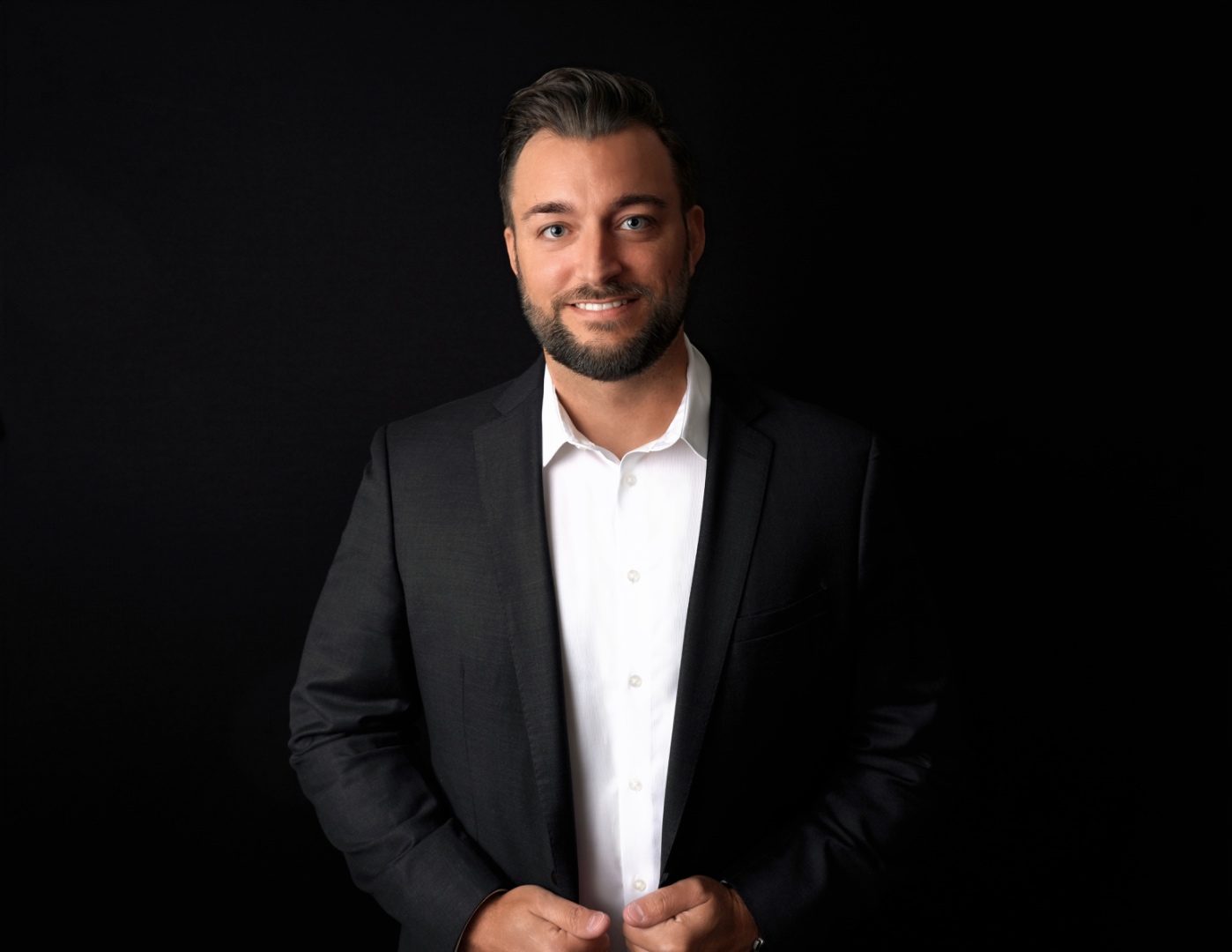
Michael Zachman · NMLS #1682867
I'm a mortgage advisor with CrossCountry Mortgage based in Southwest Florida. I close FHA, VA, USDA, and conventional loans across Charlotte, Sarasota, Lee, and Palm Beach counties. Same-day pre-approvals when your documents are in. I'm getting buyers ready right now for the anticipated July 13, 2026 relaunch.